A blog archive is arranged around the days you published and the questions people searched. A book needs a route a reader can follow from beginning to end. The outline is where you make that route.
This method works for a creator with a handful of strong essays as well as a large archive. You will leave with a chapter plan and a list of material to rewrite. It will not turn every post into a chapter automatically.
01
Write the promise before choosing posts
Describe one reader and the change they want to make. “A book about travel” is too broad to decide what belongs. “A first-time remote worker can plan a month abroad without forgetting the practical details” gives you a useful filter.
Write a one-sentence promise, then list three questions a reader would need answered in order. If your posts cannot answer the middle question, that is a missing chapter, not a reason to force an unrelated post into the book.
Reader: someone planning a first month of remote work abroad.
Promise: make a realistic plan for work, housing, and day-to-day routines.
Likely sequence: decide whether the trip fits → prepare the essentials → settle into a repeatable week.
02
Inventory the archive without copying it yet
Make a simple list with each post’s title, URL, main idea, strongest example, and date of any claim that may need checking. Add a decision column: keep, combine, update, or leave on the blog. Do not use page views alone as the selection rule: a popular answer to a narrow search may interrupt the book’s argument.
| Post | What it contributes | Decision |
|---|---|---|
| Choosing a remote-work destination | A decision checklist | Keep, then update the examples. |
| My first week abroad | A useful mistake and a concrete scene | Use as an opening example, not a whole chapter. |
| Ten packing lists for ten cities | Repeated preparation advice | Combine the durable points into one checklist. |
| Laptop deals this month | A time-sensitive offer | Leave on the blog. |
If your site runs on WordPress, its Tools → Export documentation explains how to download posts as a WordPress XML file. WordPress.com also notes that its content export contains links to media, rather than the media files themselves. Treat an export as a source copy; check images separately and move only selected text into your working manuscript. Other platforms have different export paths.
03
Arrange chapters around decisions, not publication dates
Group the kept material by the job it does for the reader. Each chapter should answer a different question and make the next one easier to understand. Put the chapter question at the top of your outline. Under it, list the posts, examples, and new material it needs.
Read only the chapter questions in order. If the sequence does not make sense without the posts underneath, reorganize it now. This is faster than formatting a full manuscript and discovering the gap later.
04
Example: turn eight posts into four chapters
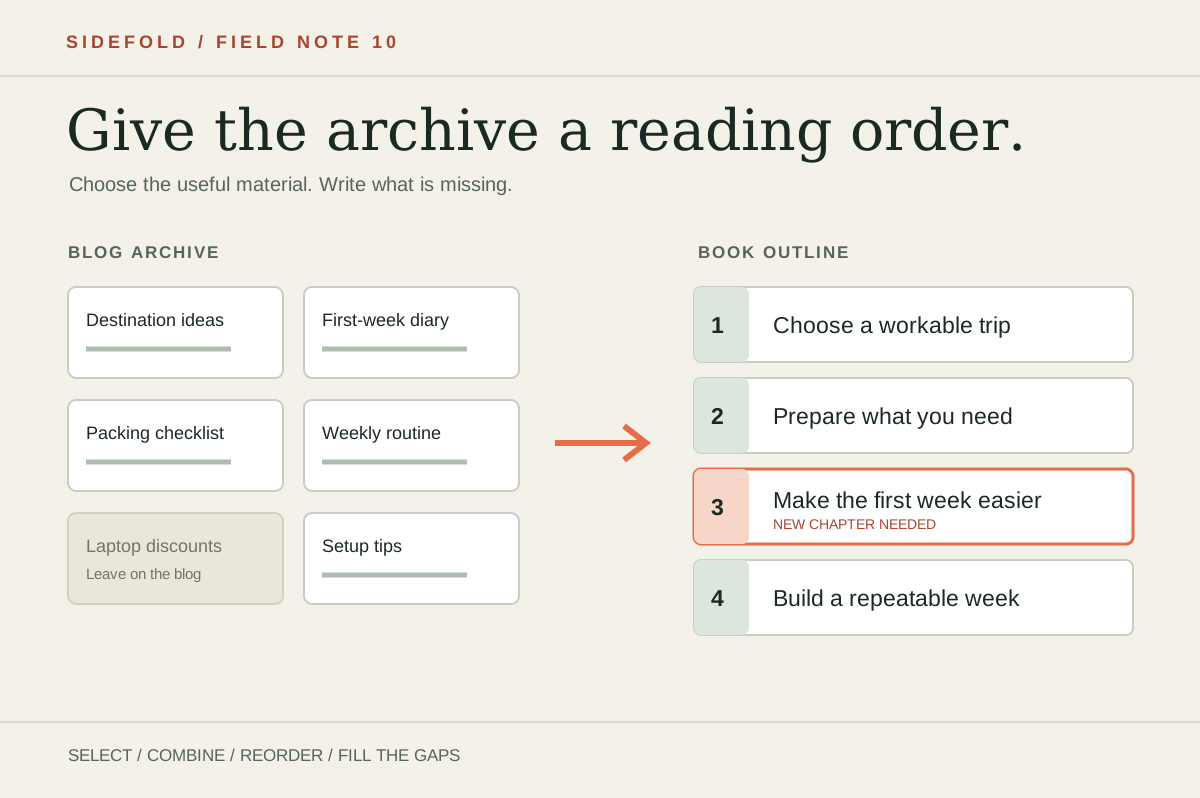
Imagine the remote-work creator has eight posts: two on choosing a destination, three on packing and setup, one diary from week one, one on work routines, and one list of current laptop discounts. A possible outline is:
- Choose a workable trip. Merge the two destination posts and add a decision worksheet.
- Prepare what you need. Combine the three overlapping packing and setup posts into one process.
- Make the first week easier. Use the diary as an example, then write the missing practical chapter around it.
- Build a week you can repeat. Revise the routine post and add a closing review exercise.
The discount post stays online. The diary moves from chronology to evidence. The first-week chapter is new because the archive never taught that step clearly. These choices make the book useful even for a reader who has seen some of the original posts.
05
Rewrite for a continuous reading experience
Draft the chapters in one document. Remove repeated “welcome” paragraphs, search-focused openings, old calls to action, and references such as “in last week’s post.” Keep the examples that teach; add a short transition where the reader needs to understand why the next chapter follows.
Then check anything that can age: prices, platform features, legal or tax references, external links, and screenshots. Replace a stale fact with a current primary source or narrow the claim. Confirm that you have the right to reuse any guest text, photography, or illustrations; your own prose does not automatically give you rights to every asset embedded in an old post.
Give a beta reader the outline and one revised chapter. Ask where they felt lost, what they already knew, and what action they could take after reading. Revise the structure before spending time on the cover or file formats.
06
Prepare the book as a separate edition
Once the manuscript works as a continuous read, use clear chapter headings, descriptive links, image captions, and a source list where needed. In Google Docs, File → Download lets you save a copy in a chosen format. Inspect any exported file before sharing it; a clean document does not guarantee that every image, page break, or link will look right in a reader’s format.
Sidefold’s blog-to-book page explains its role in this workflow: select and revise the source material first, then bring a finished manuscript into the publishing process. Its ebook maker uses a structured Google Doc to prepare web, PDF, and EPUB editions you can review. If you also plan a print edition or outside distribution, check that provider’s separate file and metadata requirements. Our self-publishing guide covers those later decisions.
07
Common questions
Can I put my blog posts into a book without rewriting them?
You can collect them, but a useful book usually needs a new sequence, fewer repeated introductions, updated examples, and chapters that bridge gaps. Test a short section with a reader before deciding how much to revise.
How many posts do I need to start?
There is no minimum. Start with a clear reader problem and a small group of posts that answer different parts of it. A short, coherent guide is more useful than a long archive with repeated advice.
Does a WordPress export give me a finished manuscript?
No. WordPress exports content as an XML file for moving or backing up site data. Keep it as a source copy, then select and edit the book text in a manuscript document.
Choose five posts and write four chapter questions.
Mark what each post contributes, then write the chapter your archive is missing.